An overbite is one of the most common alignment issues patients notice in photos but rarely address, partly because it can feel hard to define and partly because correction sounds complicated. You may notice that your upper teeth sit too far forward over your lower teeth, that your jaw feels strained when you bite down, or that a past dentist mentioned your bite could use attention. These are not permanent limitations, and clear aligner therapy has made addressing them more accessible than many patients expect.
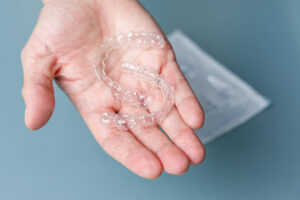
At Naylor Family Dental and Implant Center, Dr. Brian Naylor offers Invisalign for patients throughout Las Vegas who want to address overbites without traditional metal braces. Invisalign’s series of clear, custom-made aligners can gradually shift both teeth and jaw position to create a more balanced bite, and the treatment is more discreet and comfortable than many patients expect going in.
What Is an Overbite?
An overbite is a type of malocclusion where the upper front teeth extend significantly beyond the lower front teeth when the mouth is closed. Some overlap between upper and lower teeth is normal; the concern arises when that overlap becomes pronounced enough to affect function or cause wear on the teeth.
Overbites fall into two broad categories. A dental overbite occurs when the positioning of the teeth is the main factor, with the upper teeth angled too far forward. A skeletal overbite involves differences in jaw development. Invisalign is most effective for dental overbites and mild to moderate skeletal overbites; more severe skeletal cases may require additional intervention. Dr. Naylor will evaluate your specific situation during a consultation to determine whether Invisalign is the right fit.
Left unaddressed, a significant overbite can contribute to uneven tooth wear, jaw muscle strain, difficulty fully closing the mouth, and increased vulnerability to chipping on the lower front teeth. Treating the underlying alignment issue can reduce all of these risks over time.
How Invisalign Corrects an Overbite
Invisalign works by using a series of clear aligners that apply gentle, targeted pressure to the teeth over time. Each aligner in the sequence moves the teeth a small, controlled amount, and the cumulative effect guides both the teeth and, to a meaningful degree, the jaw into better alignment.
For overbite correction specifically, Invisalign may incorporate small attachments bonded to certain teeth to help anchor movement, as well as elastic bands that assist with shifting jaw position. Your treatment plan is developed based on a 3D digital scan of your teeth, so the sequence of aligners is customized to the exact movements your bite requires. Most patients wear each set of aligners for one to two weeks before advancing to the next set in the series.
Benefits of Invisalign for Overbite Treatment
For patients who qualify, Invisalign offers several practical advantages over traditional braces when treating an overbite:
- Virtually invisible: clear aligners are far less noticeable than brackets and wires, which matters for patients in professional settings
- Removable for eating and hygiene: you take the aligners out to eat, brush, and floss, making it easier to maintain your oral health throughout treatment
- Predictable outcomes: 3D treatment planning software lets you see the projected result before treatment even begins
- Fewer office visits: check-ins typically happen every six to eight weeks rather than the more frequent visits required for bracket adjustments
Effectiveness depends on wearing the aligners as directed, typically 20 to 22 hours per day. Patients who commit to consistent wear consistently achieve better and faster results.
What to Expect During Your Invisalign Treatment
The process begins with a consultation and a 3D digital scan of your teeth. Dr. Naylor reviews the scan and determines whether your overbite is a good candidate for Invisalign treatment. If it is, a custom treatment plan is created and your first set of aligners is ordered from the laboratory.
Most overbite correction cases take somewhere between 12 and 24 months, though the timeline varies depending on severity and how consistently you wear the aligners. You’ll check in with our office periodically so Dr. Naylor can confirm your teeth are tracking correctly and make any needed adjustments. After treatment, a retainer is typically worn to hold the new position of your teeth long-term.
Frequently Asked Questions
Can Invisalign fix a severe overbite?
Invisalign works most effectively on dental overbites and mild to moderate skeletal overbites. Severe skeletal overbites, which involve significant differences in jaw size or position, may require surgical intervention or a combined treatment approach. Dr. Naylor will assess your bite during a consultation and let you know whether Invisalign is a viable option for your specific situation or whether another path would produce better results.
How long does Invisalign take to correct an overbite?
Most overbite correction cases with Invisalign take between 12 and 24 months. The exact timeline depends on the severity of the misalignment and how consistently you wear your aligners each day. Wearing them for the recommended 20 to 22 hours per day keeps treatment on schedule. Dr. Naylor will give you a more specific estimate during your consultation once he has reviewed your 3D scan.
Is Invisalign for overbites covered by dental insurance?
Some dental insurance plans include orthodontic coverage that can apply to Invisalign treatment. Coverage varies by plan and often involves a lifetime maximum benefit for orthodontic care. Our team can help you verify your specific coverage before treatment begins. We also offer financing through CareCredit, Cherry, and Proceed Finance for any costs not covered by insurance.
What happens if I don’t address my overbite?
An untreated overbite can lead to uneven wear on your teeth over time, strain on the jaw muscles, and in some cases increased risk of chipping on the lower front teeth. Some patients also experience jaw discomfort or tension headaches related to bite misalignment. Addressing the issue can reduce these long-term risks and improve both comfort and function.
Start Your Invisalign Treatment at Naylor Family Dental and Implant Center
If you’ve been considering Invisalign for an overbite but weren’t sure whether it would work for your situation, the best first step is a consultation. Dr. Naylor will examine your bite, explain what Invisalign can and cannot address in your specific case, and walk you through what treatment would look like from start to finish.
Our Las Vegas office offers flexible financing through CareCredit, Cherry, and Proceed Finance, and we accept several insurance plans that include orthodontic benefits. Complete our contact form to schedule your Invisalign consultation at Naylor Family Dental and Implant Center today.